
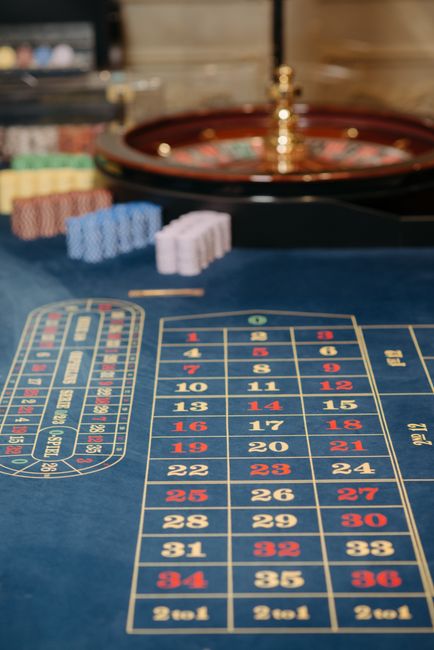
Most players pick a slot because the theme looks fun or a streamer hit a big win on it. Then they wonder why their $100 bankroll evaporates in eleven minutes while a friend stretched the same amount across three evenings. The answer almost never lies in luck alone — it lies in two numbers most players never bother to check: RTP and volatility.
Getting comfortable with these concepts won't turn you into a winner. Nothing will, because the house edge is baked into every game. But it will stop you from playing the wrong machine for your bankroll, your patience, and your mood. That's worth more than any “hot slot” tip.
Return to Player (RTP) is the theoretical percentage of all wagered money a slot pays back over millions of spins. A 96% RTP slot returns $96 for every $100 staked — eventually, across an enormous sample. In a single session, that number is nearly meaningless. You might run at 400% for an hour or lose everything without a single feature.
Where RTP matters is comparison shopping over time:
Here's the trap: a 97% RTP slot with brutal volatility can feel far worse than a 94% slot with low variance. RTP tells you the destination, not the journey.
Volatility (or variance) describes how payouts are distributed. High-volatility slots pay rarely but can pay enormously. Low-volatility slots pay often but small. Medium sits between.
Think of it like this. A low-volatility slot is a slow drip. A high-volatility slot is a lottery ticket disguised as a fruit machine. Both can have identical RTP.
Concrete examples help. Book of Dead-style slots run high volatility, roughly 96% RTP, with max wins in the 5,000x–10,000x range but long dry spells. Meanwhile, low-volatility classics like Starburst hover around 96% too, but most spins return a fraction of your stake. Same headline number, radically different experience.
If you want a rough rule: your bankroll should be at least 100–200x your bet for medium volatility, and 300x+ for high volatility. Playing a 10,000x max-win slot at $5 a spin with a $50 bankroll is not a strategy — it's a donation. Anyone weighing up options should see nowgoall.it.com.
Two more specs separate good slots from bad ones for your style:
When you open a new slot, check the paytable or info screen. Reputable developers publish RTP, volatility, and max win. If a casino buries these numbers or refuses to show RTP, that's a red flag worth acting on.
The same logic applies to sports betting, and most punters ignore it. Bookmaker margins — the “vig” or overround — are the sports equivalent of house edge. On a typical two-way market, a fair book would price both sides at 2.00. A real book might offer 1.91 each side, which means the implied margin is around 4.7%.
Sharp bettors shop multiple books for the best price, because 1.91 vs 1.95 over a hundred bets is serious money. Accumulators make it worse: four legs at 4.7% margin each compound into a much bigger edge for the house. That's not a reason to avoid parlays entirely, but know what you're paying for the thrill.
Live betting, novelty markets, and same-game multis typically carry higher margins than main markets. If you're punting for entertainment, fine. If you're trying to grind, stick to the lowest-margin markets.
Poker is the strange exception in the iGaming world. The house doesn't play against you — it takes a rake. That means a skilled player can have a positive expected value over time, which is impossible on slots, roulette, or most casino games.
If you're serious about poker, treat it like a part-time job with variance, not a casino night out. Track results, study ranges, and don't move up in stakes because you ran hot for a weekend.
Here's a simple framework that ties it all together:
None of this makes you immune to losing. Variance is real, and short sessions can go any direction. But these habits separate the players who last from the ones who reload twice in a night and quit the hobby entirely.
Casinos and bookmakers are businesses built on margins. Slots have a fixed edge you cannot outplay. Sportsbooks price in a profit on every market. Poker, alone among these, rewards skill meaningfully over thousands of hands.
Knowing RTP, volatility, and how rake works won't beat the math. But it puts you in charge of your own experience instead of leaving it to whatever a streamer told you was hot this week. Play games whose math matches your bankroll and temperament. Set limits. And treat the whole thing as entertainment with a cost, not a plan to get rich. That mindset is what keeps iGaming fun instead of frustrating.

Hi, my name is Anthony kuber. I am artist and fashion designer.
I love to travel and writing blogging.
Your email address will not be published. Required fields are marked *
Software Developer & Writer
Hey, I'm Diva, a developer and writer blending code and creativity. I'm driven by a deep curiosity and a relentless pursuit of excellence. Join me as I craft digital solutions and captivating stories.


