
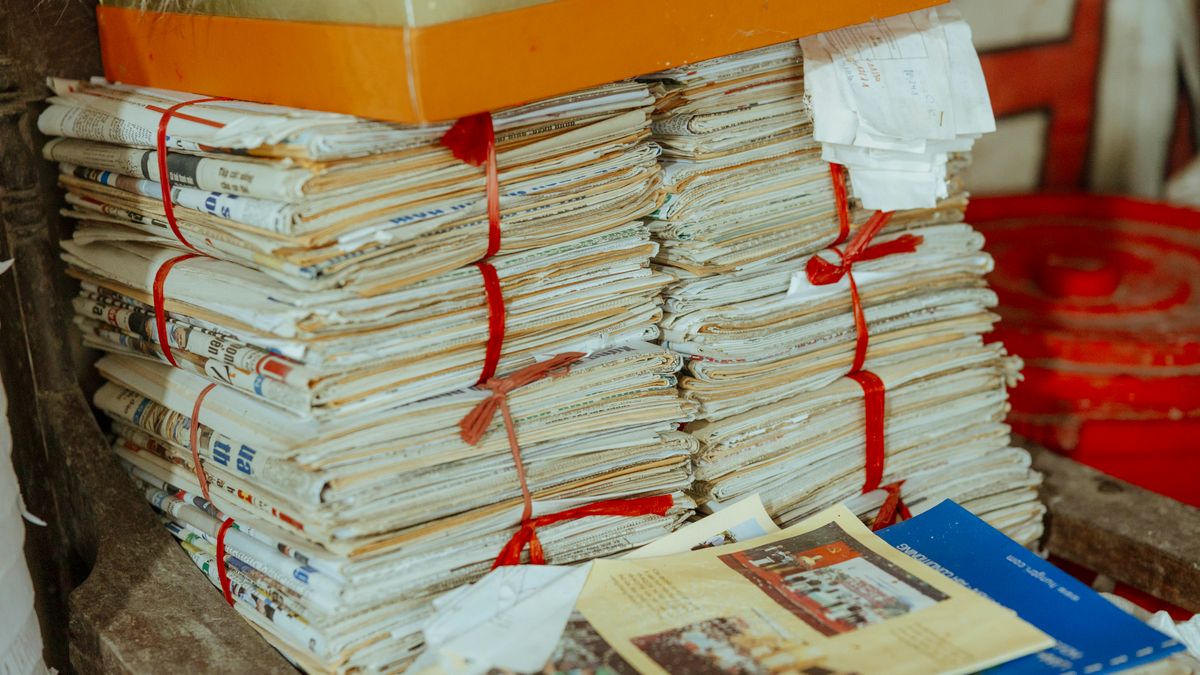
If you have ever peered at a 17th-century testament or an 18th-century kirk session minute and felt your eyes glaze over, you are not alone. Scottish handwriting from past centuries is not one single style. It mixes Secretary Hand, italic, and later round hand, often within the same page. Add local dialect, Latin legal phrases, and a casual attitude to spelling, and even experienced family historians can find themselves stuck. The good news is that palaeography is a skill, not a talent. With practice, you can learn to recognise the shapes and rhythms that once seemed impenetrable.
Secretary Hand dominated Scottish documents from the 16th to the early 18th century. Its letters can look very different from modern forms. The most notorious problem is the minim—the short vertical stroke used in i, m, n, u, and sometimes v and w. In a crowded word, these strokes can merge into a picket fence. A word like min might look like unm or inn. Read by comparing with known words nearby, and count the strokes carefully.
Other shapes to watch for include the long s (ſ), which resembles an f. It appears at the start or middle of words, so ſon is son and poſſession is possession. The letter y was often used as a shorthand for the Old English thorn, representing th. That is why ye means the, yt means that, and ym means them. In Scottish hands, quh frequently stands for wh: quhilk is which, quhen is when, and quhat is what. Similarly, sch often represents sh, as in schaw for show. The letter z can be a yogh, giving us Menzies (pronounced Mingis), Dalziel (Dee-ell), and Zetland (Shetland).
Scottish scribes loved to save ink. You will meet the same contractions again and again, so it is worth building a personal glossary. Christian names are often shortened with a superscript letter: Wm for William, Jas for James, Geo for George, Alexr for Alexander, Robt for Robert, Margt for Margaret, and Eliz for Elizabeth. Jno is John, Tho is Thomas, and Chas is Charles. You will also see Mr, Mrs, and Esqr.
Common word contractions include sd for said, afsd for aforesaid, wch for which, wth for with, and &c for et cetera. Latin abbreviations appear in legal records: obt for obiit (died), viz for videlicet (namely), supra for above, and infra for below. In accounts, s stands for shillings and d for pence, so 13s 4d is one merk. A superscript c or r can turn a name into a patronymic, and M' is a very common abbreviation for Mac or Mc, as in M'Donald or M'Intosh.
Even when you can read every letter, the vocabulary can stop you. Scottish records are full of words that have no direct English equivalent or that look familiar but mean something different. Umquhile means deceased or formerly. A toun is a farm or township, not a town in the modern sense, and a fermtoun is a group of tenanted farms. A kirk session was the local church court, and its minutes can be a goldmine for family historians. Sasine is an instrument of possession, retour is an inheritance record, and testament is a will. A teind is a tithe, a grassum is an entry fine, and a feu is a form of land tenure. You may also meet boll, firlot, and chalder as measures of grain, and merk, pound Scots, and shilling as currency. Remember that before 1707, pound Scots was worth about one-twelfth of pound sterling.
Standardised spelling is a recent invention. In older documents, the same person may appear as McDonald, M'Donald, Makdonald, and Macdonell within a few pages. Scribes wrote what they heard, and accents varied wildly. Vowels were especially fluid: ai, ay, ei, and ey might all represent the same sound. Consonants were doubled or dropped at will. Place names are just as slippery. A burn is a stream, a brae is a hill, a loan is a lane, and a yair is a fish trap. When you find a name that looks impossible, say it aloud in a broad Scots accent. You may be surprised how often the mystery resolves itself.
Good palaeography is mostly method. Start with a clear image, good light, and a magnifying glass or zoom tool. Transcribe exactly what you see, not what you expect. Keep the original spelling and use square brackets for uncertain letters, like M[ac]donald or t[he]. Do not modernise as you go; that is a separate step. Build an alphabet chart from the document itself. Find a clear a, e, m, and s, and use them as anchors. Read the whole page before you worry about a single word, because context often solves what shape alone cannot.
It also helps to work with parallel records. If a testament is hard to read, look for a testament testamentar or inventory copy. If an Old Parish Register entry is faint, compare it with a later Valuation Roll or Poor Law application. Kirk session minutes, sasines, and retours often repeat names and relationships in clearer hands. Over time, you will develop an eye for the period and the scribe. Patience is the real secret. Every document you decipher makes the next one easier, and every small victory brings your Scottish ancestors a little closer.

Hi, my name is Anthony kuber. I am artist and fashion designer.
I love to travel and writing blogging.
Your email address will not be published. Required fields are marked *
Software Developer & Writer
Hey, I'm Diva, a developer and writer blending code and creativity. I'm driven by a deep curiosity and a relentless pursuit of excellence. Join me as I craft digital solutions and captivating stories.


