
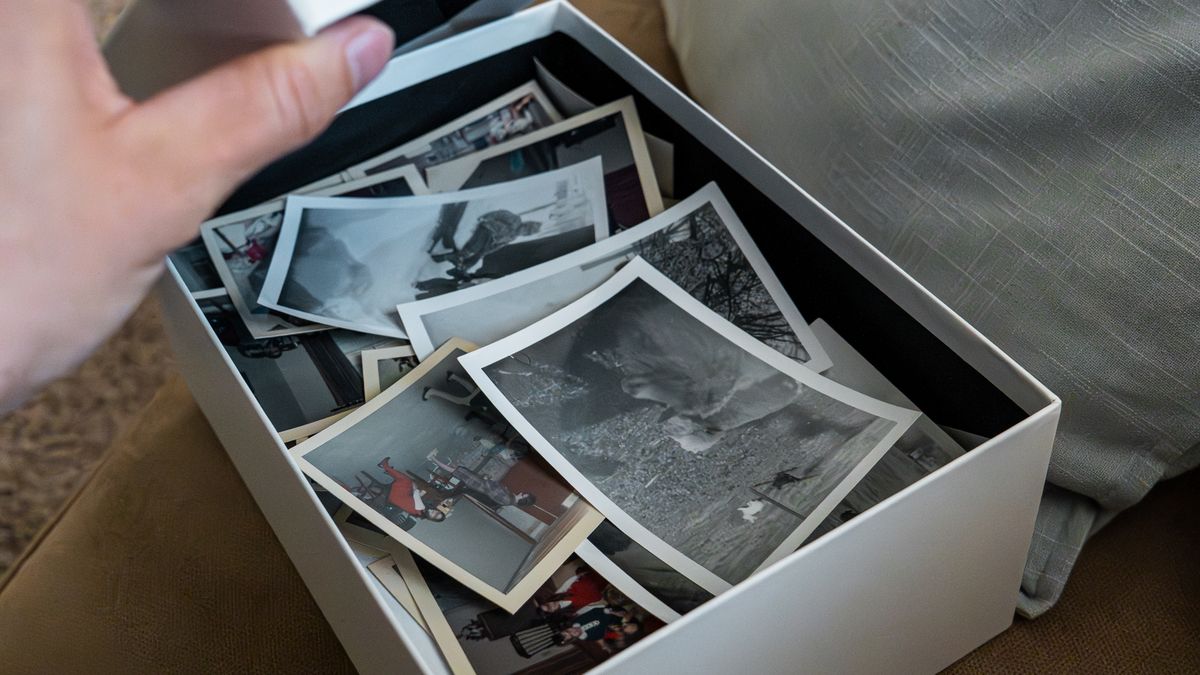
Every Scottish family cupboard seems to hold the same quiet treasures: a biscuit tin of sepia portraits, a bundle of letters tied with string, a quaich nobody can quite place, and perhaps a kilt that has shrunk in the loft. These are not merely sentimental objects. A photographer's backmark gives you a street address and a rough date; a sampler records a child's age and parish; an inscription inside a watch carries a christening or a retirement. Handled with care, such things can push your research back a generation or two.
The instinct to reorganise everything at once is the enemy of good practice. Work box by box, bundle by bundle, and record what you find before you move anything.
Most damage to family photographs is chemical or environmental rather than accidental. The materials touching a print matter as much as the room it sits in.
Clean, dry hands are fine for most prints; cotton gloves help with metal, textiles and very old paper. Hold a photograph by its edges, supporting the whole print with both hands, and never drag one across another.
When you label, write only on the reverse, along one edge, using a soft pencil such as a 2B. Never write across the image, and never use a ballpoint pen on a glossy or resin-coated print, as the pressure embosses the surface. If you are unsure, slip the photograph into a sleeve and write the details on the sleeve instead. For letters, transcribe the inscription into your catalogue rather than annotating the original.
A simple reference system prevents the same photograph being identified three times by three cousins. Use a surname prefix, box number and item number — MAC-B1-014 — and keep the number written faintly on the sleeve or, where safe, the item.
A straightforward spreadsheet works well. Useful columns include reference, item type, description, people identified, place, date, how confident you are in that date, photographer or maker, condition, current location and notes. Add a column for "story" and use it freely: the tale of how a brooch came into the family is often more useful to a future researcher than a guess at its date.
You rarely need laboratory equipment to narrow a photograph to a decade. Combine several clues.
Heirlooms date in similar ways. Silver carries hallmarks; ceramics carry registration marks; Scottish pebble jewellery and Cairngorm brooches belong largely to the later nineteenth century; samplers often include a name, age, parish and year. Tartan, weaving quality and dye colour can suggest a period too, though tartan tells you far more about fashion than about clan ancestry.
Unfold letters gently and remove rusty pins, staples and paper clips, storing the documents flat in acid-free folders. Never repair tears with household tape. Textiles such as a christening gown, shawl or kilt are best rolled around a padded tube, interleaved with acid-free tissue, and kept away from plastic bags that trap moisture. Clean them only on specialist advice.
Finally, capture the spoken record while you can. Sit with older relatives, ask about nicknames, occupations, addresses and the objects themselves, and record or write down the answers. Keep a copy of your catalogue with the collection, another with a trusted relative, and a digital backup in a separate place. Photographs and heirlooms survive best when someone knows what they are — and that someone is now you.

Hi, my name is Anthony kuber. I am artist and fashion designer.
I love to travel and writing blogging.
Your email address will not be published. Required fields are marked *
Software Developer & Writer
Hey, I'm Diva, a developer and writer blending code and creativity. I'm driven by a deep curiosity and a relentless pursuit of excellence. Join me as I craft digital solutions and captivating stories.


